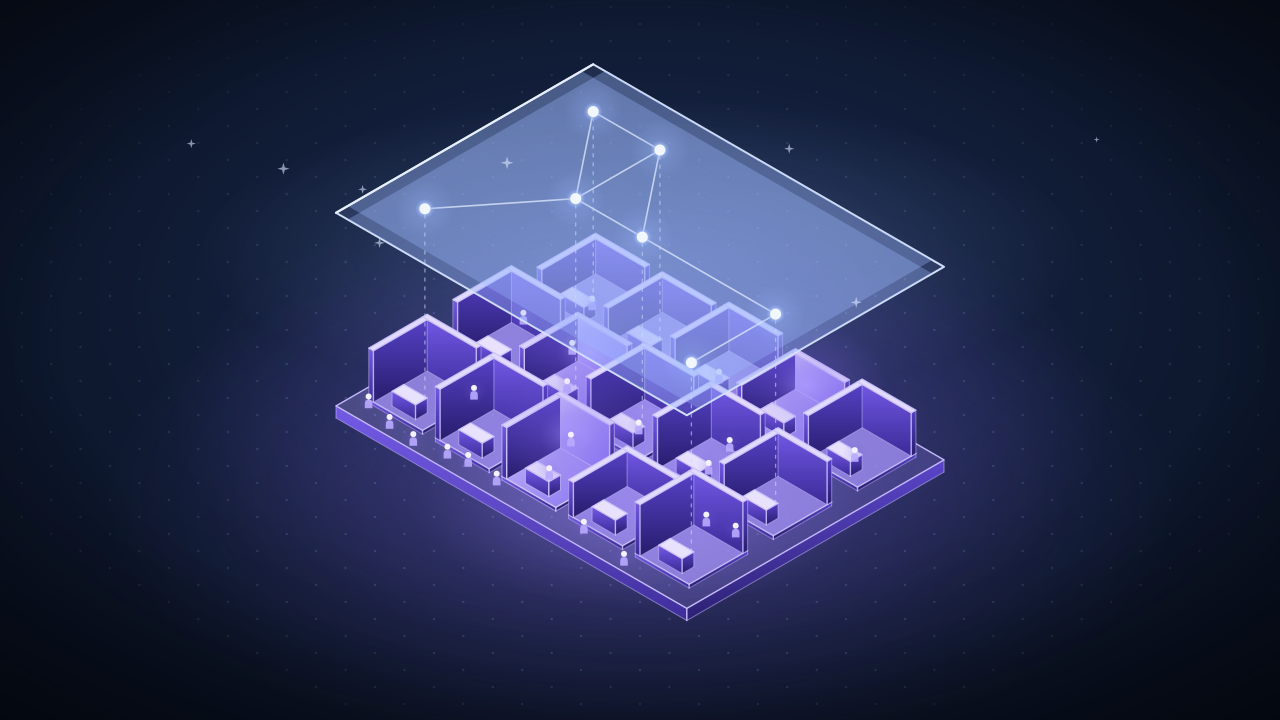
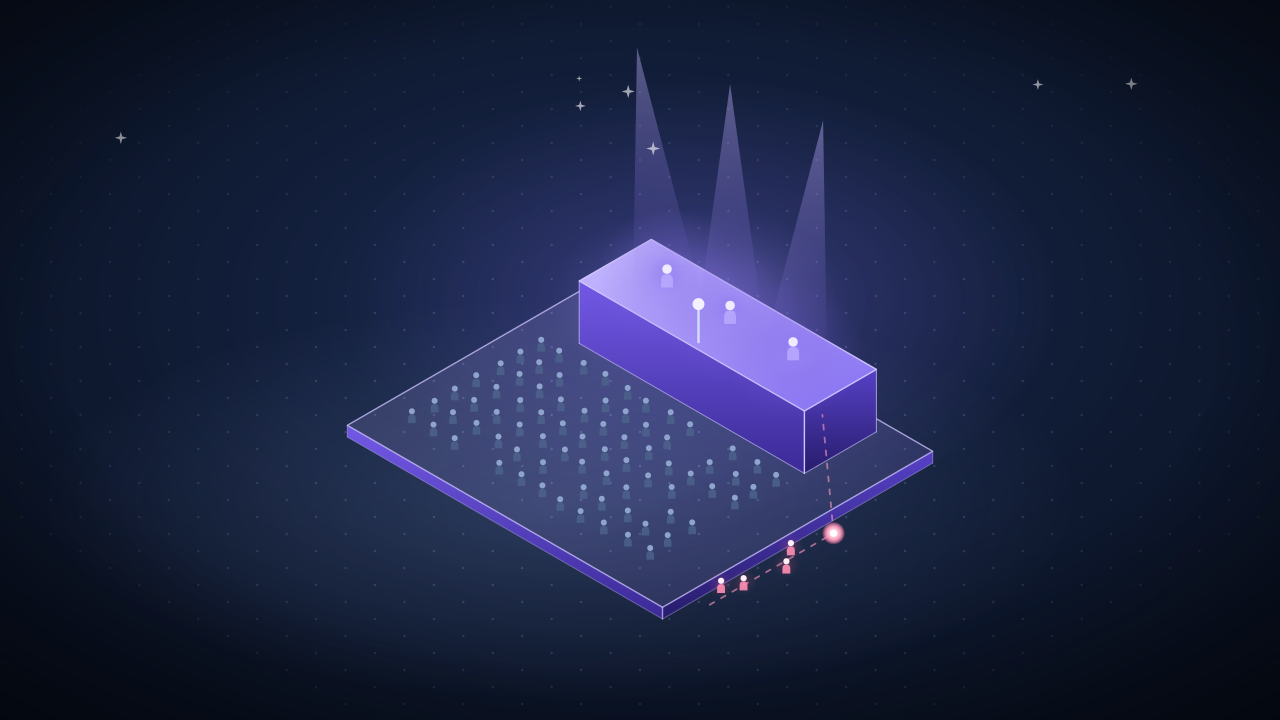
Openness pays up to a point: UK manufacturers collaborate most broadly at moderate levels of IP protection, and fewer partners join when protection becomes very strong. Successful firms and individuals reveal selectively and time their openness, closed while ideas are unprotected and open once patents are filed, but openness carries hidden costs in stress and lost control.
Five studies, 2011–2022
Key findings
- Openness peaks at moderate protection. Among 2,931 UK manufacturers, the breadth of formal innovation partnerships rose with IP protection up to about 13 on an 18-point scale and then declined1.
- Firms search widely but partner narrowly. On average, they drew on about 39 percent of the possible types of external knowledge sources but partnered formally with only 14 percent of the possible types of partners1.
- Selective revealing is the norm. 91 percent of interviewed crowdsourcing solvers revealed only part of their solution, 67 percent agreed on non-disclosure and 23 percent bypassed the platform to deal with the client directly2.
- Openness has a dark side. Open innovation professionals mostly responded to sharing-protecting tensions with anxiety, defensiveness and frustration rather than constructive coping3.
- Timing decides. Jaguar kept its rotary gear selector project closed until it filed a patent, then opened it to universities and an engineering firm to gain speed4.
Market outcomes
What the studies mean for each part of the industry.
Hackathons, challenges and crowdsourcing contests attract stronger contributions when rules let participants reveal selectively, through non-disclosure terms and staged disclosure; 23 percent of solvers sidestepped the intermediary to reach the client directly.
Firms that show at fairs, pitch at events or enter challenges protect first and reveal in modules: file patents before engaging partners, share complete knowledge only with a core group and keep outer partners at a distance.
Very strong IP protection goes with narrower collaboration, and very weak protection with exposure; portfolios gain from firms that balance the two and that manage the stress openness places on staff.
The paradox of openness
Firms open their innovation processes through partners, crowdsourcing contests, hackathons and the trade fairs and conferences where they show new products. Each channel brings in knowledge but exposes the firm's own. In the UK Innovation Survey, manufacturing firms drew on about 39 percent of the possible types of external knowledge sources on average, but partnered formally with only 14 percent of the possible types of partners1.
Studies at the level of firms, collaborations and individuals show when openness pays.
Protection and openness at the firm level
Protection and openness go together, up to a point. Among 2,931 UK manufacturing firms, those with stronger strategies to protect their innovations, through patents, secrecy, lead time or complexity, searched more widely for outside knowledge and collaborated with more types of partners1. For formal collaboration, the relationship formed an inverted U: breadth peaked at about 13 on an 18-point scale of protection and declined among the most protective firms1.
Protection strategies vary by industry. Chemicals firms scored highest, followed by electrical equipment; textiles, food, drink and tobacco, and wood scored lowest1.
Source: Laursen & Salter, based on the UK Innovation Survey · Release date: 2014 · Region: United Kingdom · Survey period: 2002 to 2004 · Number of firms: 2,931
View data
| Item | Value | Note |
|---|---|---|
| Chemicals | 10.05 | |
| Electrical equipment | 8.40 | |
| Textiles | 6.68 | |
| Food, drink and tobacco | 5.68 | |
| Wood | 4.40 |
Sharing and protecting in collaborations
R&D collaborations manage the tension through the type of knowledge they share. In eight collaborations in the Netherlands and Sweden, the complexity, tacitness and novelty of knowledge decided what could be shared, and trust and distance between partners shaped how5. Firms followed one of two strategies: open exchange among all partners, or a layered scheme in which a core group shares openly and outer members receive less; the larger the number of partners, the more likely a layered scheme5. Licensing put the chosen strategy into practice5.
Crowdsourcing solvers reveal selectively
Individuals face the same paradox. On a crowdsourcing platform used by 8,604 solvers between 2009 and 2013, mostly experienced researchers, solvers balanced sharing their solutions with protecting their ideas; 62.6 percent of the 1,149 surveyed held a doctorate2. Among 43 interviewed solvers, 91 percent revealed only part of their solution, typically when the knowledge was complex and modular, and 67 percent agreed on non-disclosure2.
Around one in four, 23 percent, bypassed the intermediary to build trust with the client directly, a share the authors found surprising given the platform's promise to broker trust2. Among survey respondents, 16.9 percent had reached an agreement with the client for their submitted solution2.
Source: Foege et al. · Release date: 2019 · Region: Worldwide · Number of respondents: 43 · Interview period: 2015 to 2016
View data
| Item | Value | Note |
|---|---|---|
| Revealing only part of the solution | 91% | |
| Agreeing on non-disclosure | 67% | |
| Building patent thickets | 49% | |
| Controlling complementary assets | 47% | |
| Filing patents before submitting | 37% | |
| Black-boxing the solution | 30% | |
| Bypassing the intermediary | 23% |
The hidden costs of openness
Openness takes a toll on the people who manage it. Interviews with 14 professionals at six firms in energy, oil and gas, transport, mining and paper and at expert organizations showed that most responses to sharing-protecting tensions were destructive, revealing anxiety and defense mechanisms3. Once tensions escalated into outcomes, such as failing to capture value, only destructive responses were observed; few professionals balanced or separated the tensions constructively3.
Timing: closed first, open later
The timing of openness can resolve the paradox. Jaguar developed the rotary gear selector for the Jaguar XF, a first to market protected by four granted patents, between 2001 and 20064. The project stayed closed for around a year while the patent position was weak and the concept immature; filing the patent marked the switch to openness, before any partner was engaged4.
Universities then ran user trials and market research, and an engineering services firm built the prototype faster than an in-house team could; experiments with 30 participants restored senior managers' confidence after an internal crisis4. Tasks were split into modules so that no partner saw the whole, and a supplier's independent patent on one component was a small loss against the speed gained4.
Source: Bahemia et al. · Release date: 2018 · Region: United Kingdom · Interviews: 44 · Classification: Eventamin
View data
| From | To | Link | Note |
|---|---|---|---|
| Closed: concept matures | Patent filed | About one year | |
| Patent filed | Universities: user trials | Main link | |
| Patent filed | Engineering firm: prototype | Main link | |
| Universities: user trials | First to market | 30 test users | |
| Engineering firm: prototype | First to market | Faster prototype | |
| Engineering firm: prototype | Universities: user trials | Modular tasks |
Notes on the data
The figures are based on five studies published between 2011 and 2022: an analysis of the UK Innovation Survey covering 2,931 manufacturing firms in 2002 to 2004, a case study of eight R&D collaborations, 1,149 survey responses and 43 interviews with crowdsourcing solvers, 14 interviews across six firms and expert organizations, and 44 interviews on one car development project1–5. The firm-level survey is cross-sectional and does not show cause. The share of breadth is the average share of the possible types of sources and partners listed in the survey. The sequence of the Jaguar project is Eventamin's coding of the study's findings.
Sources
Study Industry source
- 1Laursen, K., & Salter, A. J. (2014). The paradox of openness: Appropriability, external search and collaboration [Journal article]. Research Policy, 43(5), 867–878. https://doi.org/10.1016/j.respol.2013.10.004First-hand
- 2Foege, J. N., Lauritzen, G. D., Tietze, F., & Salge, T. O. (2019). Reconceptualizing the paradox of openness: How solvers navigate sharing-protecting tensions in crowdsourcing [Journal article]. Research Policy, 48(6), 1323–1339. https://doi.org/10.1016/j.respol.2019.01.013First-hand
- 3Stefan, I., Hurmelinna-Laukkanen, P., Vanhaverbeke, W., & Oikarinen, E.-L. (2022). The dark side of open innovation: Individual affective responses as hidden tolls of the paradox of openness [Journal article]. Journal of Business Research, 138, 360–373. https://doi.org/10.1016/j.jbusres.2021.09.028First-hand
- 4Bahemia, H., Sillince, J., & Vanhaverbeke, W. (2018). The timing of openness in a radical innovation project, a temporal and loose coupling perspective [Journal article]. Research Policy, 47(10), 2066–2076. https://doi.org/10.1016/j.respol.2018.07.015First-hand
- 5Bogers, M. (2011). The open innovation paradox: knowledge sharing and protection in R&D collaborations [Journal article]. European Journal of Innovation Management, 14(1), 93–117. https://doi.org/10.1108/14601061111104715First-hand
Evidence on a specific market question is available as commissioned research.